Phrasing.FM
Can you learn a language with just flashcards
Can You Learn a Language with Just Flashcards? Spaced Repetition Explained
In this episode of Phrasing FM, the host explores the effectiveness of spaced repetition and flashcards for language learning. He shares personal experiences, discusses limitations, and introduces features from his app Phrasing that make flashcards viable even for very foreign languages. Key takeaway: Yes, you can learn a language primarily through spaced repetition — but it depends on the language’s similarity to ones you know and the depth of explanations available.
00:00 – Introduction The host welcomes listeners and poses the central question: Can you learn a language through just spaced repetition?
00:26 – The Direct Answer
Short answer: Kind of.
Full answer: Yes — especially with the right tools. He achieved conversational Portuguese almost entirely through flashcards.
00:38 – Personal Anecdotes
Portuguese success (00:45): Learned ~95% via flashcards using Lingvist. After a couple of months, he could hold real conversations and make friends with non-English speakers.
Japanese failure (01:02): Six months of flashcards yielded almost nothing due to vast grammatical, structural, and cultural differences.
02:51 – Introducing Phrasing The host built Phrasing to solve the gaps he encountered. It combines Anki-style spaced repetition with rich, on-demand explanations.
Key Features Highlighted
Detailed word explanations (03:24): Plain-English breakdowns of grammar, etymology, construction, idiomatic usage, and roots for every word.
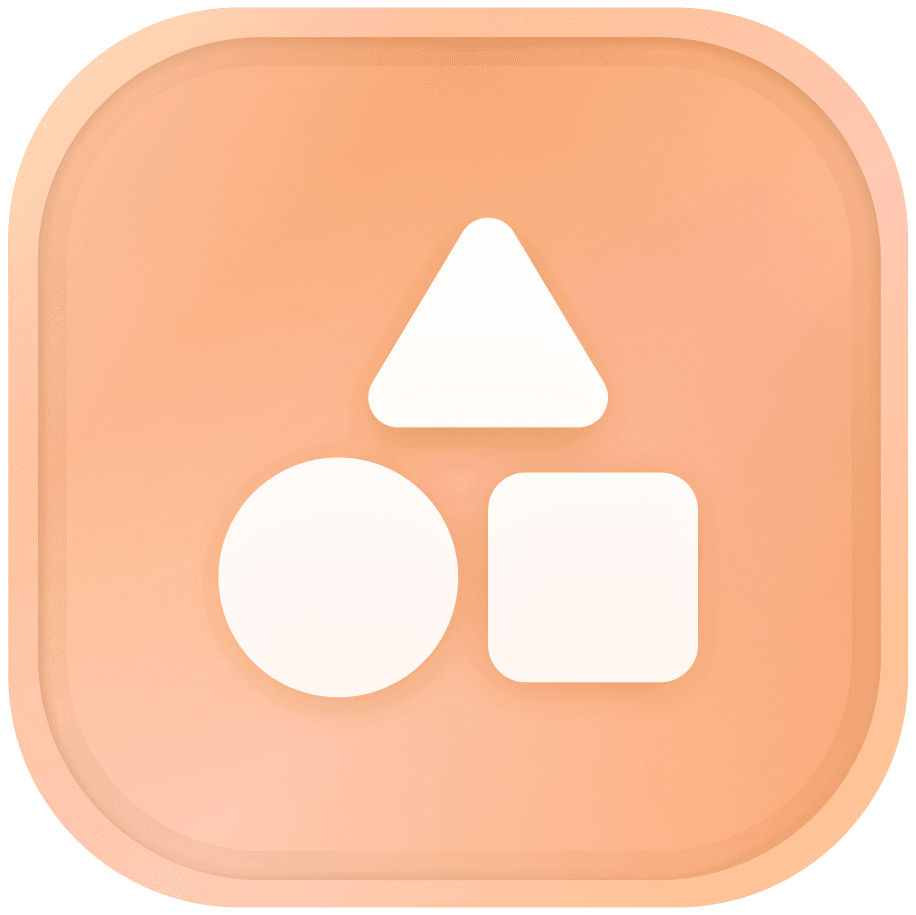
“Shapes” feature (05:25): Breaks expressions into meaningful chunks so learners can see how words combine into units of meaning — especially useful for Japanese, Chinese, Turkish, etc.
Tap-anywhere curiosity-driven learning: Answers questions you didn’t even know you had.
06:50 – How Spaced Repetition Works for Languages
Success requires reaching a critical mass (~1,000 high-leverage words).
Early “dark period” where output feels limited, followed by sudden ability to understand conversations and produce novel sentences.
Works best for related languages (e.g., Romance or Slavic); more distant languages need deeper explanatory support.
11:08 – Why Phrasing Succeeds It uses the proven Anki algorithm plus layered explanations, chunking, and easy daily integration so learners can deconstruct any sentence on the fly.
12:30 – Realistic Expectations & Next Steps Flashcards alone can get you to a surprisingly high level (B1-ish). Combine with immersion, conversation, and practice for fluency. No basement-only method works — real use is essential.
13:40 – Conclusion Spaced repetition can be a powerful primary method, especially with Phrasing. The host encourages listeners who love flashcards (or who struggled with them before) to try the app.
SEO keywords: learn language with flashcards, spaced repetition language learning, Anki alternative, Japanese language learning, Portuguese language learning, Phrasing app.
AI Transcript
00:00 All right. And welcome back to another episode of Phrasing FM, a podcast where I talk about languages and my experience building an app to learn them.
00:12 I am ready to go. I got my coffee and today we are going to answer the question, the age old question. A question as old as time itself.
00:22 Can you learn a language through just spaced repetition? And the answer may shock you.
00:29 The answer up front is kind of. And I will explain more, of course. And I have a couple different anecdotes that I want to share.
00:38 So to answer the question, is it possible? Yes. Resounding yes. I have learned a language through just spaced repetition — and okay, not one hundred percent spaced repetition, but ninety five percent through spaced repetition.
00:55 And that language was Portuguese. And almost everything I did, I did a little bit of research. I tried watching some YouTube videos. I watched a little bit of content, but ninety five percent of my time, maybe even more, was just spent doing flashcards.
01:08 And after a couple months, all of a sudden I was able to participate in discussions. I was able to make friends with Portuguese speakers who did not speak English. To this day, I still have friends who do not speak English, who just speak Portuguese, and my Portuguese is now terrible.
01:23 I have done nothing to maintain it after this one summer that I studied Portuguese and so it has just disappeared. But the reason that I was able to do this was because I speak Italian and I speak French, and so Portuguese was just a matter of kind of mixing and matching and learning new words and how they say things and a couple of different combinations.
01:48 And after a couple months it came together and something clicked, and all of a sudden I could speak some Portuguese. I couldn't speak it fluently, but I could speak it well enough to meet people to form relationships. And you know, that's what it's all about.
02:01 And so I thought this was really, really cool. This was effective. I used an app called Lingvist to learn it. Great app, good shout out.
02:09 And then they came out with a Japanese course and I thought, ooh, I'm going to do the same thing with Japanese. This was so effective with Portuguese, I'm going to do it with Japanese.
02:15 And I think I spent six months doing flashcards and I could say nothing in Japanese. I couldn't understand anything in Japanese. And it was completely a different experience.
02:26 And the reason was, is because Japanese is such a foreign language to me. I don't know how it works. I don't understand how the grammar works. The sentence structure is different, the writing structure is different. All the grammar, all the constructions, the turn of phrases, the way they communicate information. Everything was just super foreign.
02:44 And learning a couple words through a flashcard application was not going to suffice for learning Japanese.
02:51 And so enter Phrasing. Phrasing is a flashcard application that I built, or really a language learning application that I built that primarily uses flashcards, and it seeks to be able to teach you any language just from flashcards.
03:07 So taking what I've learned, what was missing in Japanese, why could it work for Portuguese? And why could it not work for Japanese? And just giving you that extra information that you need to make flashcards a sufficient language learning modality for any language.
03:24 So in phrasing, every single word is fully explained. There's a plain English explanation about its construction, the grammar, idiomatic usage, agglutination, how it breaks down, the different roots involved. Etymology, alternatives, et cetera, et cetera.
03:39 Everything is explained. So as you're going through your reviews, if you're ever curious about something, you can just tap on it and you'll get an answer. In fact, you'll get answers to questions you didn't even know you had.
03:51 The coolest thing about phrasing for me, which is surprising because I built it, is sometimes I'll tap on a word and I'll get information that just makes a crazy word click for me and I will never forget it.
04:03 The first time I see it, I just remember it because it breaks it down in such a clear way. It gives me information that I did not go in needing to know.
04:13 For example, the example that comes to mind first is the word "na jednom" in Croatian. It means suddenly and I could not get this to click until I finally read the explanations... It broke it down into "Na" and "Jedan," which means one. And it was this combination kind of "at once." And of course, that means suddenly. And as soon as I read this explanation, I've never forgotten that word again.
04:45 And so these explanations are extremely useful for learning a new language, even if it's foreign, even if it doesn't make sense, even if you're not familiar with the grammar patterns or the conjugations or anything like that. You can understand every single word.
05:02 And so naturally, again, I started using it for Japanese and I realized that it was not sufficient. Again, because the language is so foreign, because it's so complex, because they communicate information in a different way than any other language I've studied.
05:25 And so that is what sparked the idea for the shapes feature. So in phrasing, when you extract an expression, whenever you're reviewing an expression, there's a little button that looks like a collection of different shapes. And when you tap on that, it'll open up the expression in another view that's split into chunks.
05:40 And so you can tap around on these different groups of words, and you can see how these groups of words come together to form one unit of meaning. And then you can quickly tap around and see how these groups of meanings come together to formulate the entire expression.
05:56 And so this is incredibly useful for languages like Japanese or Chinese or Turkish, or any language that has a very different way of forming sentences or communicating information.
06:10 Now, when you're confused, you can tap around and read the words and maybe it still doesn't make sense. So then you open up the shapes feature... And all of a sudden you can understand everything about it. There's so many different ways to view the information... that you're never left wondering.
06:42 You have all the answers to all the questions that you have, and answers to even more questions that you didn't know you have. So you don't even have to formulate the question. You just have to be curious enough to learn.
06:50 And so to come back to the topic of the question, can you learn a language through spaced repetition? Well, it depends. How well do you understand the language and how much information is available at your fingertips.
07:01 When you're doing your reviews, do you feel like you can see something that you don't understand and make sense of it? ... And in most flashcard applications, you can't because there's no explanations for anything.
07:18 But if the language is very different, if it's very foreign, if it communicates information in a very novel way... then you really need to be able to dissect the sentence and make sense of it.
07:48 Because if you can eventually make sense of it, then that's enough to learn a language. And if you keep going through these reviews and you're making sense of everything, you're going to get the grammar patterns. You're going to internalize how they communicate information, and eventually you'll hit this critical mass of vocabulary.
08:26 Instead, when you learn a language through spaced repetition, you kind of just have to trust the process a little bit... there is this critical mass that you will eventually reach... I think it's closer to around one thousand words...
09:29 However, you do get to a point where you get past that. There is just this critical mass that once you get over, all of a sudden you can start to articulate yourself. You can start to say your own novel sentences... This has happened for me in Macedonian and Croatian...
10:25 You do have to get over this threshold. It does seem to be roughly about a thousand words. But again, if you're just memorizing a thousand words, that's not going to be enough to learn a language that you're unfamiliar with.
10:52 In rare cases, like if you speak a romance language and you're learning a romance language or Slavic languages... this can be sufficient. ... But if the language is more foreign than that, then you're going to need a little extra oomph.
11:08 And so that's what Phrasing seeks to do. It uses the same algorithm as Anki, the best spaced repetition algorithm out there. And then it builds upon it with all this other information so that as you're going through your reviews, you can start to piece together how this language works.
11:32 You can deconstruct it, you can view it from different angles. And whenever there's something you don't know, whenever you're curious, you can just tap, explore and learn. And you're doing all of this in an algorithmic way to be as optimal as possible.
11:55 It's very simple. It's very atomic. And by doing this every single day... Eventually, it'll build out this map of language, and eventually you will reach this critical point and you will be able to start speaking the language.
12:30 Of course, you're never nobody's going to lock themselves in a basement for ten years and just do enough flashcards... Language is a skill you do have to get out there. You have to hear it. You have to experience it. You have to practice it.
12:56 So it's not a silver bullet... but you can get to a surprisingly high level in a language. Maybe like a B1 level just from using flashcards. And once you're there, you start to integrate other input... You can go straight into content that interests you.
13:36 So, can you learn a language through just spaced repetition? Absolutely. Kind of, but especially with Phrasing.
13:42 So if you like spaced repetition and you want to learn a language, or if you've tried spaced repetition in the past and it hasn't been for you, consider giving Phrasing a shot. It'll really take your language learning to the next level. And you know what? You can get really far with just Phrasing.
13:55 Thanks for listening. Ciao.
Click here to watch it on youtube: