The Phrasing Blog
Where we nerd out about our product, company, and of course languages.
General
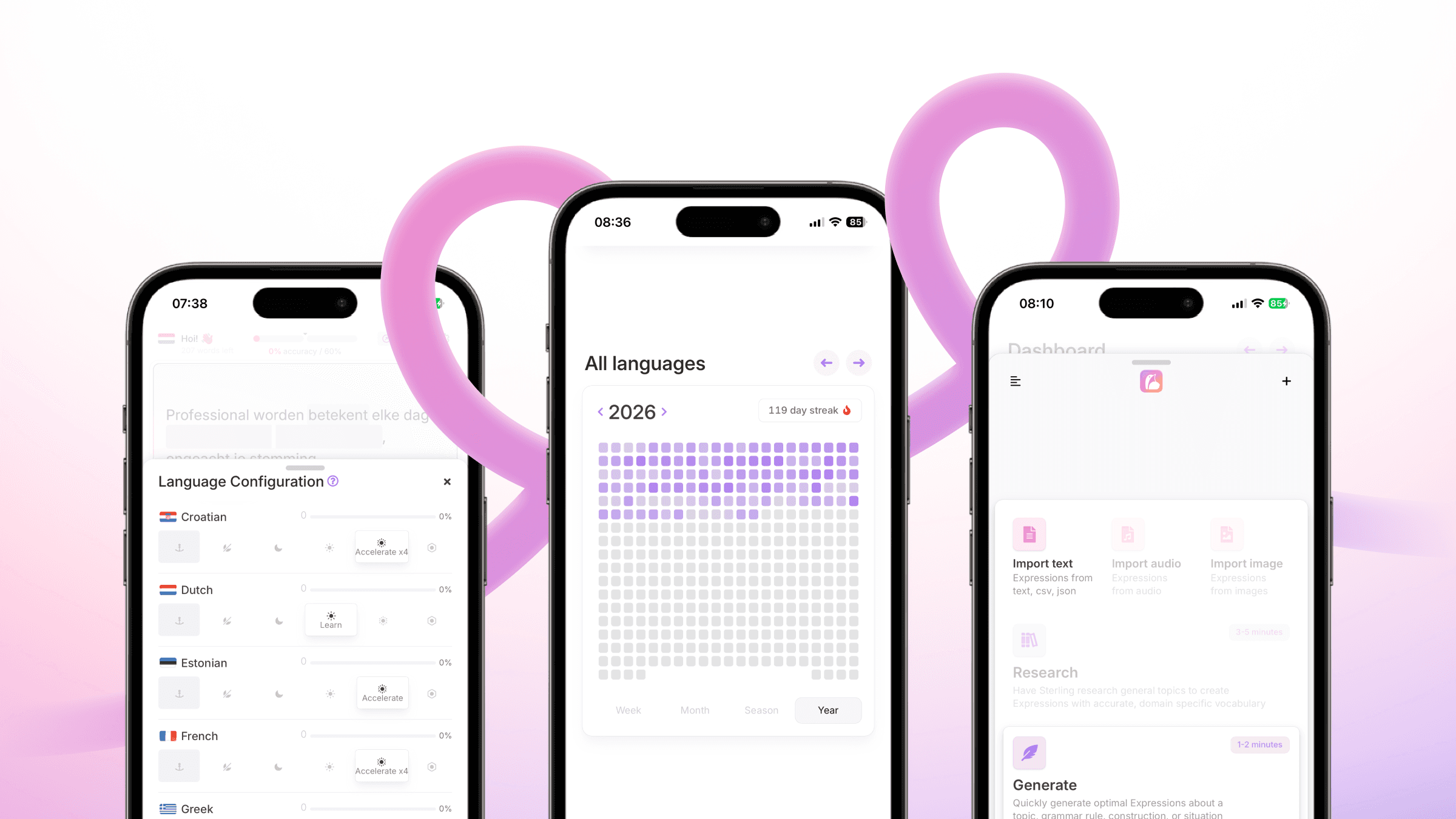
Getting started
Learn the fundamentals of Phrasing and get up and running.

Language Hooks
Language Hooks are a concept that will help you realize exactly how to learn a language.
Skip the beginner stages
Most people spend years learning, before they really start learning the language.

10x Your Language Learning
Phrasing's mission is to make language learning 10x more efficient, so you can make 10x the progress in your life.
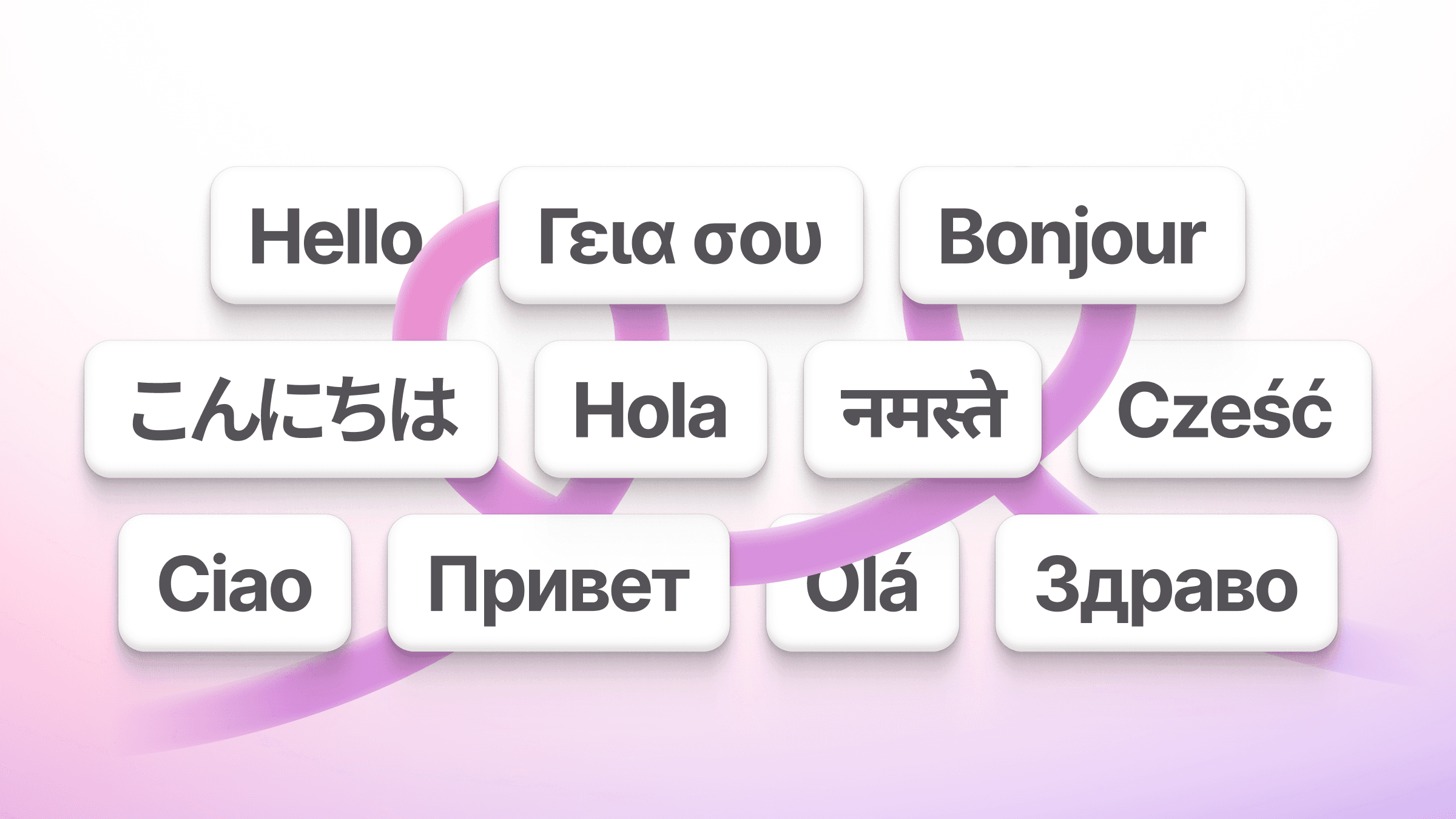
How to learn a language
My own philosophy on learning a language after 25 years of experience and building an app for 4 years.

Language learning stages
What actually happens in your brain as a new language starts to make sense? From hearing nothing but random sounds to recognizing patterns, grammar, and natural expression, these are the six stages I’ve noticed while learning languages with Phrasing.
Product

Install Phrasing as an App
Phrasing can be downloaded from the browser to work as a native app - full screen, offline, and from your home screen.

Launch Week 1
Launching some of the most requested features, all in one week. Get hype.

How to learn Expressions
You've created Expressions - now what? How can you best leverage them for maximal progress?

How to create Expressions

Three Dimensional Flashcards

How to get the most out of Expressions
Language Log

Language Log #006
Most language apps start you off with "hello," "how are you," and prepositions you'll fumble for years no matter what. This episode breaks down "language contouring," a method for skipping what you'll pick up anyway and starting with the words that actually move the needle, no matter your level.

Language Log #005
18 languages might sound like clickbait, and honestly, it kind of is. This episode covers the low-priority languages in the mix, from Maltese unlocking Arabic grammar to Cantonese's addictive tones, and makes the case for why learning a little of everything now pays off big later.

Language log #004
I tried speaking all four of my main languages back-to-back… and one of them completely broke my brain. Here’s an unfiltered look at where my French, Italian, Dutch, and Portuguese actually stand right now—and how wildly nonlinear language learning really is.

Language log #003
This month, I’m switching things up. The Language Log is going audio-first less polished, more honest, and hopefully the start of genuine monthly updates on what’s actually working.
Language Log #002
Language Log Table of Contents Language Log #000 - What is a Language Log Language Log #001 - Starting points Language Log #002 - 3 month update 3 month update Alright, so this is my first update in this language log series! I planned to do updates monthly, and I’ll try to do so going forward, but quarterly updates should be the minimum. A few things have changed goal wise: Japanese was moved from Tier 2 to Tier 1 Cantonese was moved from Tier 1 to Tier 2 Mandarin was moved from Tier 2 to Tier 3 Croatian I feel like I’m making the most progress in Croatian. You can see at the end of the update where I go through come completely new, completely native cards. Obviously, I didn’t understand them in the beginning, but there’s definitely a lot of progress (vs knowing next to 0 Croatian 3 months ago). I think the best way to describe my progress is that I’m able to understand sentence structure, including what’s a noun, what’s a verb, and what is something else (adjective, adverb, etc). That’s actually huge! Sentences in Croatian no longer sound like a bunch of crazy sounds to me, and not even just strings of crazy words - instead they just sound like sentences in Dutch and French where I just don’t understand the words. I’m also making surprising progress in cases. I’m don’t think I could write down any declension tables from memory, but when inputting words, I probably have a good idea of the case and gender more than half of the time. Turkish Turkish is a very different language from anything I’ve studied. There’s just so much about the sentence structure, agglutination, etc that is so foreign. Despite studying nearly the same amount as Croatian, I definitely have not made the same progress. There’s a lot more words that I don’t know their purpose in a sentence, and people speaking Turkish still sounds like crazy sounds to me. However, what I am strarting to get down is some fo the agglutination. Words like arabuluculuğundan・from mediation, söylemiștim・as I told you, inanılmazdı・was unbelievable, and beğenmiyorsun・you don’t like are no longer overwhelming and I’m recognizing patterns across various words. Video update

Language log #001
What does learning 18 languages at once actually sound like? In this first Language Log, I test my Dutch, French, Italian, Portuguese—and painfully attempt 14 more languages that were basically at zero just two months ago.
Phrasing.FM

Language Fitness
Comprehensible input is cardio. Spaced repetition is lifting weights. Traditional courses are HIT classes. A fitness analogy for explaining language learning to anyone who's set foot in a gym: why flashcards build lasting gains, why input alone won't get you fluent, and why courses work like CrossFit.

Language Neurons
Someone said flashcards don't work. So this episode takes that comment apart, sentence by sentence. B1 exams, "wrong neurons," memorizing vs learning. If you've ever been told you're using the language wrong, this one's for you.
Stop overthinking language learning
Stop overthinking language learning. Every method, from flashcards to full immersion, comes down to one thing: understand, then repeat. This episode cuts through the noise on perfect routines and secret methods with one simple rule that actually works.

Levels of Fluency
Fluency isn't one thing. It's five. This episode breaks fluency into five real levels, from broken-but-effective "disjointed" all the way to native-beating "beyond." Find out where you actually stand, and why chasing a CEFR letter is the wrong goal.

Gamification promised the world - but did it deliver?
Streaks. Points. Badges. It feels like progress, but is it? This episode breaks down why gamification hijacks your motivation instead of building it, using Duolingo as the case study, and why the best reward is just being able to speak the language.

Your focus on perfection is holding back your language progress
Nobody has ever left a conversation thinking "wow, that was grammatically correct." This episode makes the case for a "hot skin" over perfect grammar: why chasing correctness misses the entire point of language, and what actually makes people want to talk to you.